The method behind Atlas Zone Therapy
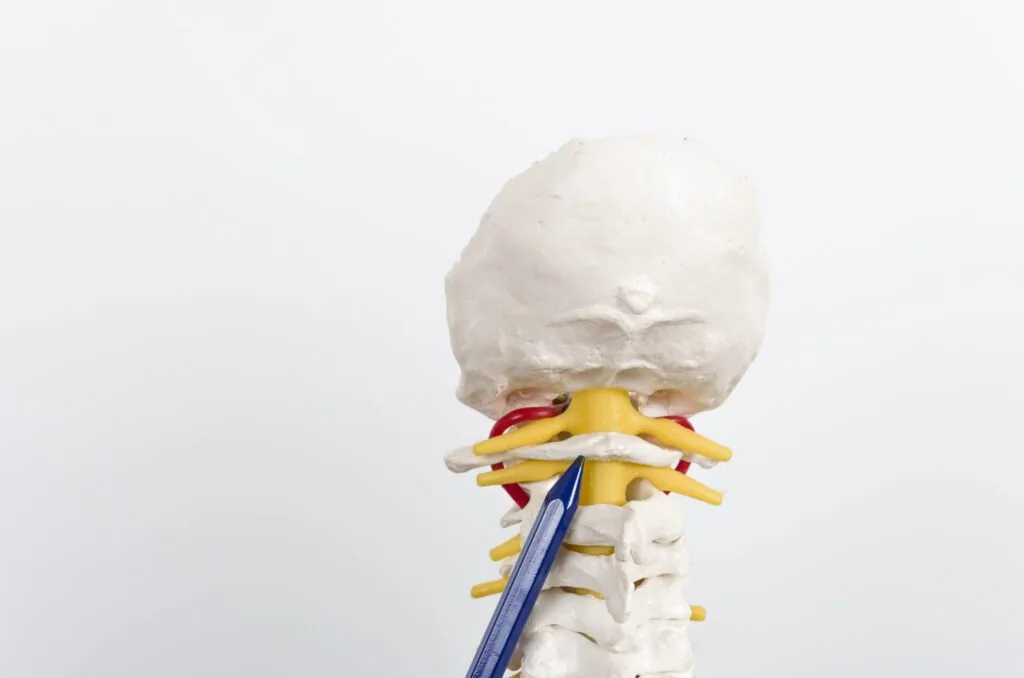
The original atlas correction method was developed in Switzerland by René Schümperli. It works on a simple observation: the atlas is held out of position by the short muscles between the skull and the top two vertebrae. Manipulating or cracking the vertebra does not solve this, because the muscles pull it straight back. Releasing the muscles does.
Drs. Wim van den Berg trained with Schümperli in 2009 and was certified by him as a trainer in 2011, one of six worldwide. In 2019 he joined forces with Dr. Matthew Voigts, a British doctor of osteopathy, to re-screen and refine the method. The result is Atlas Zone Therapy, the only atlas treatment method currently being studied at Amsterdam UMC.
Step 1: Intake and assessment (15 to 20 minutes)
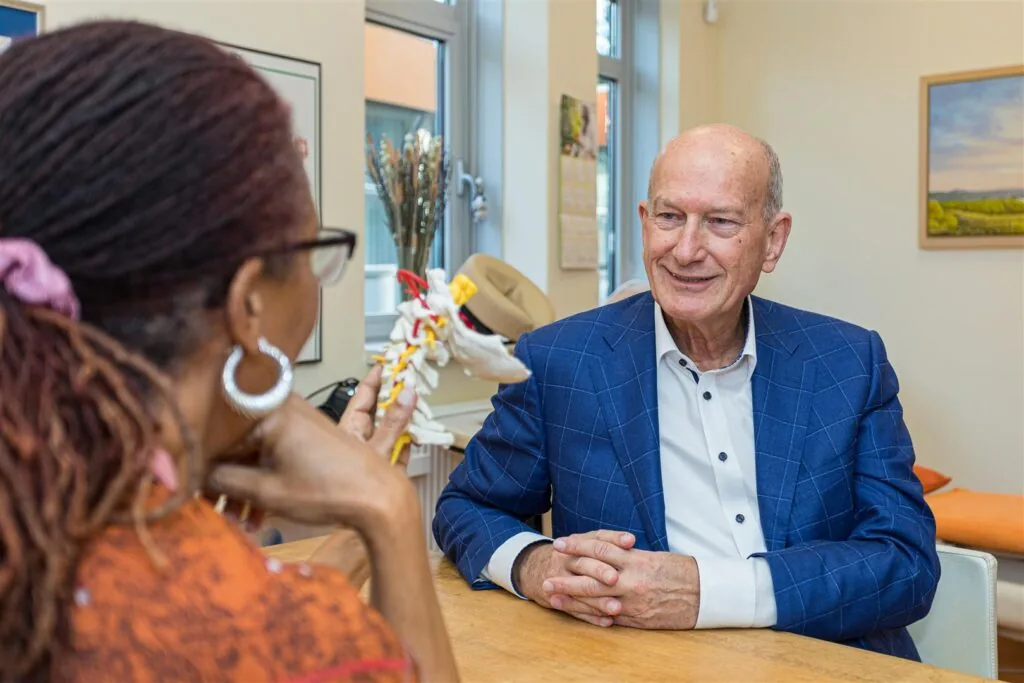
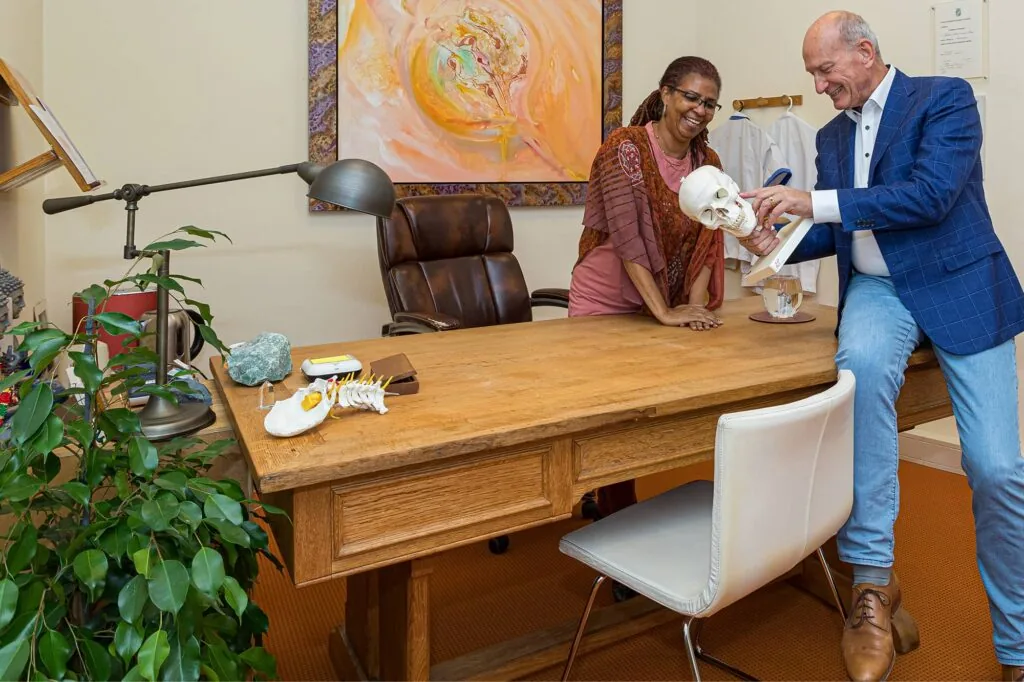
You talk through your complaints and history: accidents, falls, birth circumstances, previous treatments. Dr. Wim looks at your posture, checks your leg length on the treatment table, assesses the pelvis and observes how far your head turns to each side. He then palpates the sides of the atlas to feel the rotation. As a clinical psychologist he also pays attention to stress and how you are carrying yourself. Everything is noted so it can be compared after the treatment.
Step 2: Muscle release with the device (about 10 minutes)
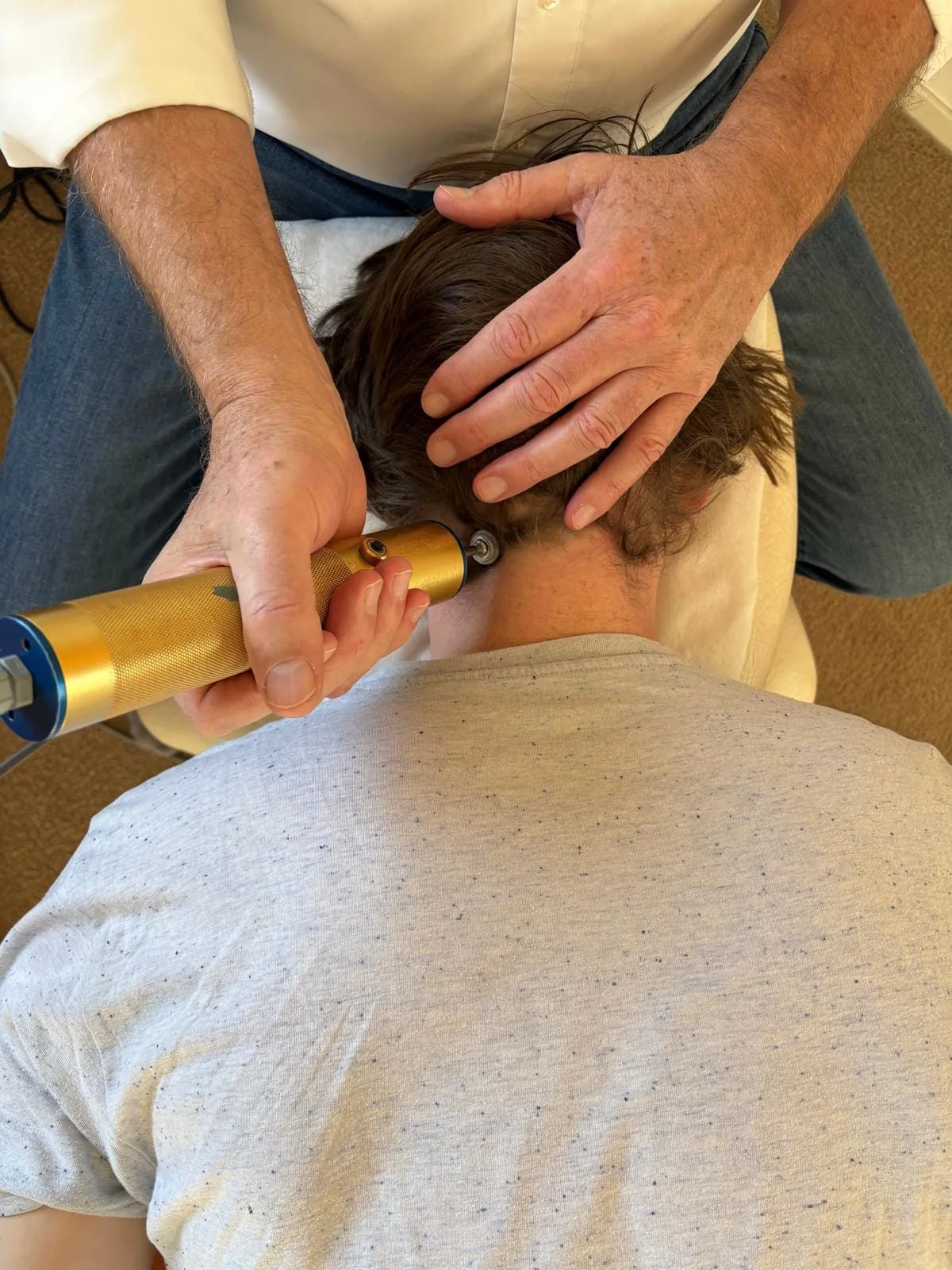
You sit or lie comfortably with your head supported. Dr. Wim places the tip of the vibration device on the short muscles just below the skull and works methodically along the atlas zone on both sides. The vibration is deep and firm. You will feel strong pressure and the muscles may feel tender, but the atlas itself is never pushed, pulled or twisted. Most clients describe it as intense rather than painful.
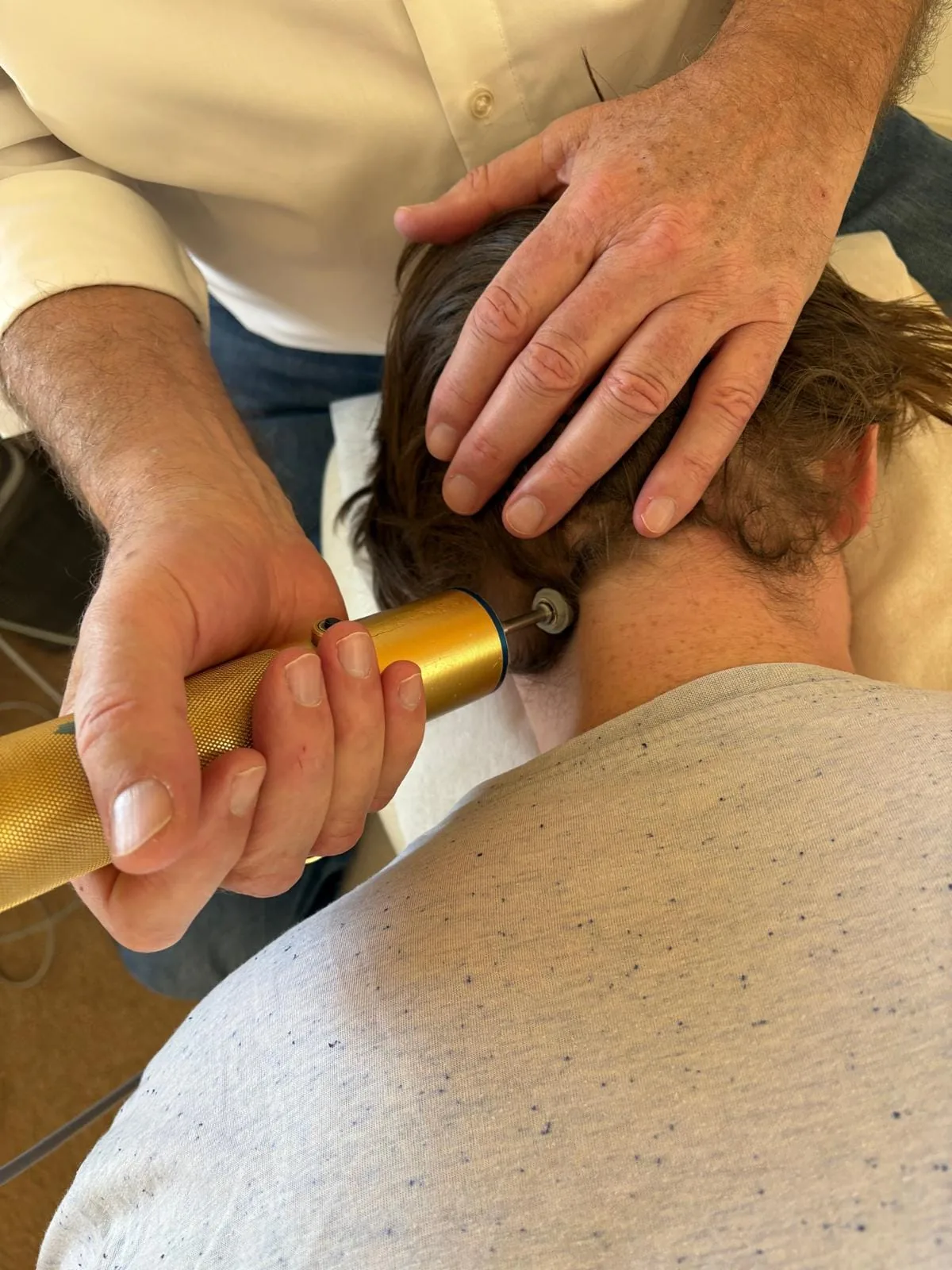
Step 3: The atlas settles
As the muscles let go, tension in the ligaments and tissues around the atlas drops and the vertebra has room to return towards its optimal position. Dr. Wim re-checks leg length, head rotation and the atlas by palpation. Clients often notice the change immediately: the neck feels longer, the head turns further, both legs are now the same length on the table.
Step 4: Follow-up check
A short second appointment, usually within a few weeks, confirms the atlas has held its new position and looks at how your body is adapting. For most people this completes the treatment. Some clients with very long-standing complaints or a history of heavy impact choose another session later.
What the treatment is not
- It is not chiropractic. There is no high-velocity thrust and no cracking. See atlas therapy vs chiropractic.
- It is not massage or physiotherapy, although it often makes those treatments more effective afterwards.
- It does not treat a symptom. It corrects the atlas so the body can stop compensating.
- It does not require x-rays or scans.
Who it is suitable for
Adults and children of all ages. It is used for people with migraine, neck pain, dizziness, leg length difference, back pain, insomnia and chronic fatigue, and as prevention for people who simply want their body to work with less effort. If you are currently undergoing chemotherapy or radiotherapy it is advisable to wait. Tell Dr. Wim about any recent surgery, osteoporosis or serious neck injury at the intake.
Duration and price
Plan about 60 minutes for the first appointment and 20 to 30 minutes for the follow-up. Fees for the Malaysia consultation days are explained on the cost page. To reserve a slot, book a consultation.