Why the neck stays tight
When the atlas is rotated, the short muscles between the skull and C2 are stretched on one side and shortened on the other. They never fully relax, even in sleep. The larger neck and shoulder muscles then tighten to stabilise the head. Massage, stretching and physiotherapy work on those larger muscles, which is why relief is real but temporary: the underlying pull from the atlas is still there.
How atlas correction addresses it
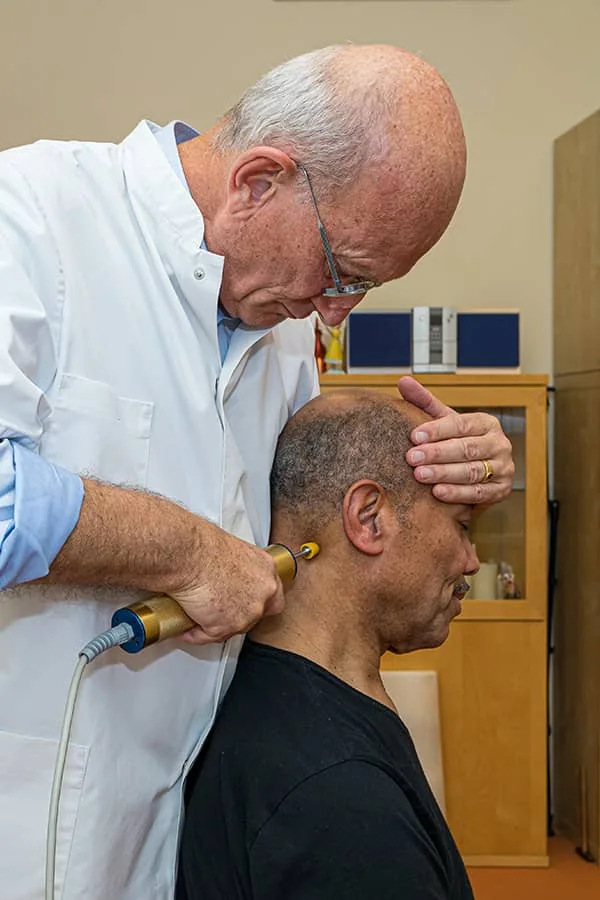
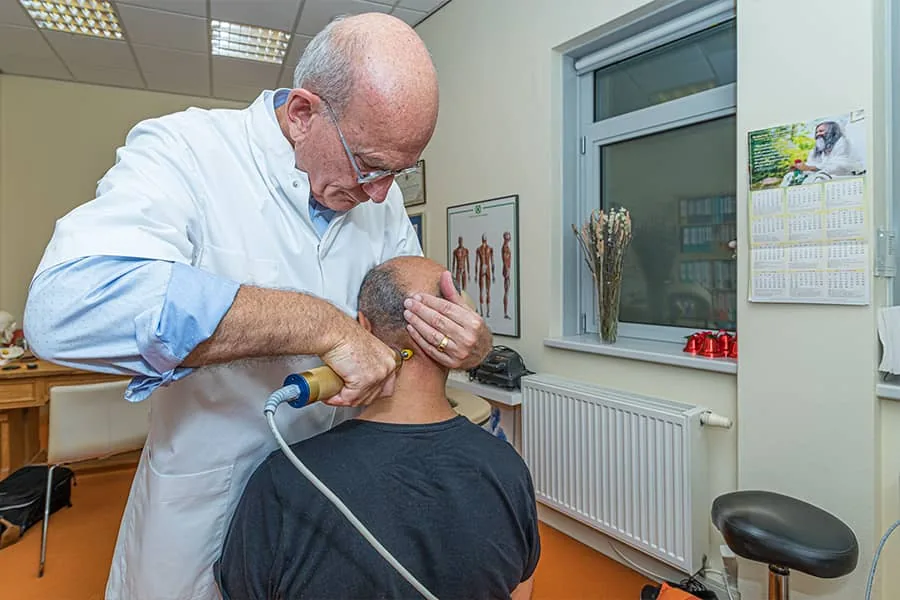
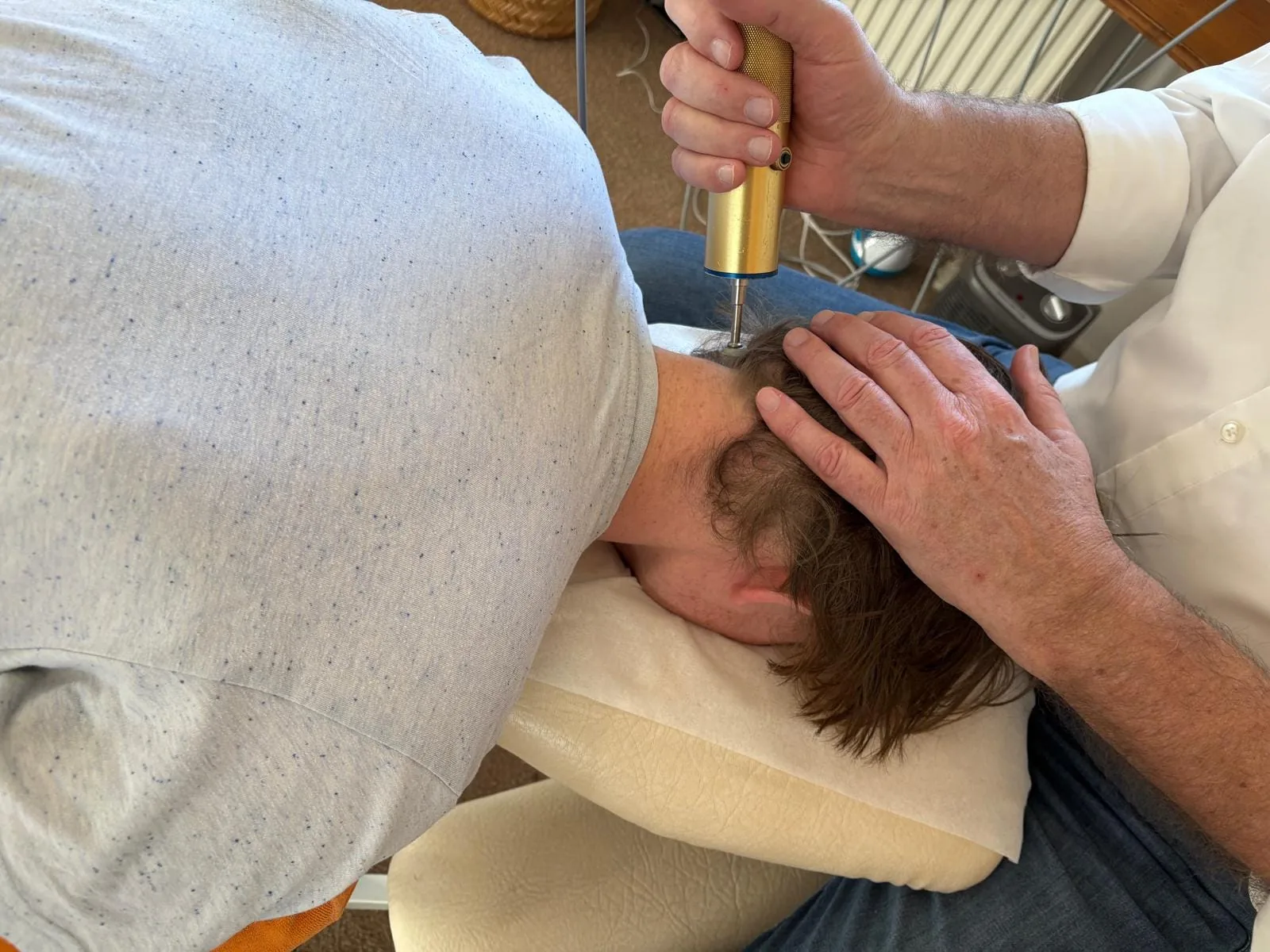
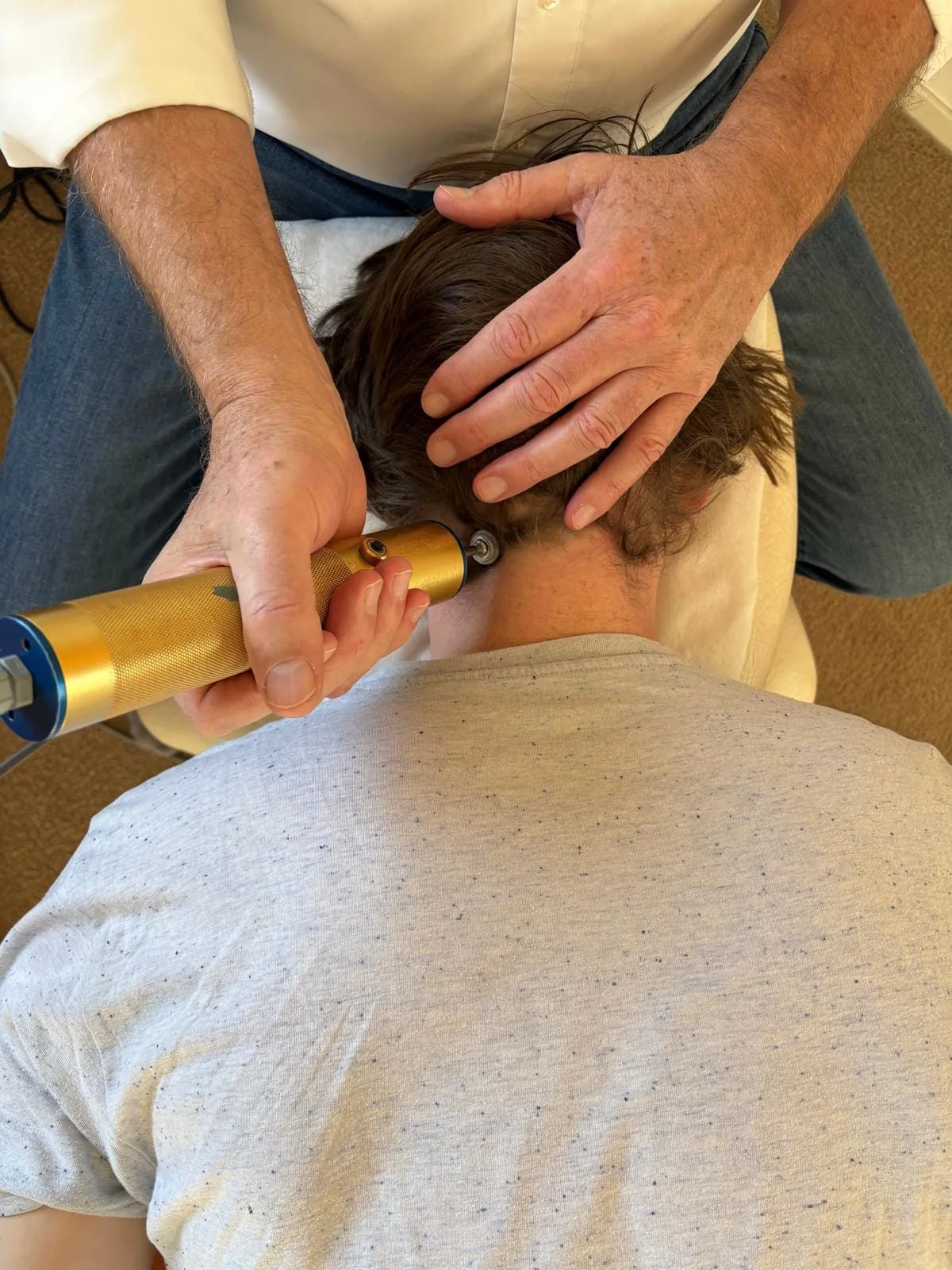
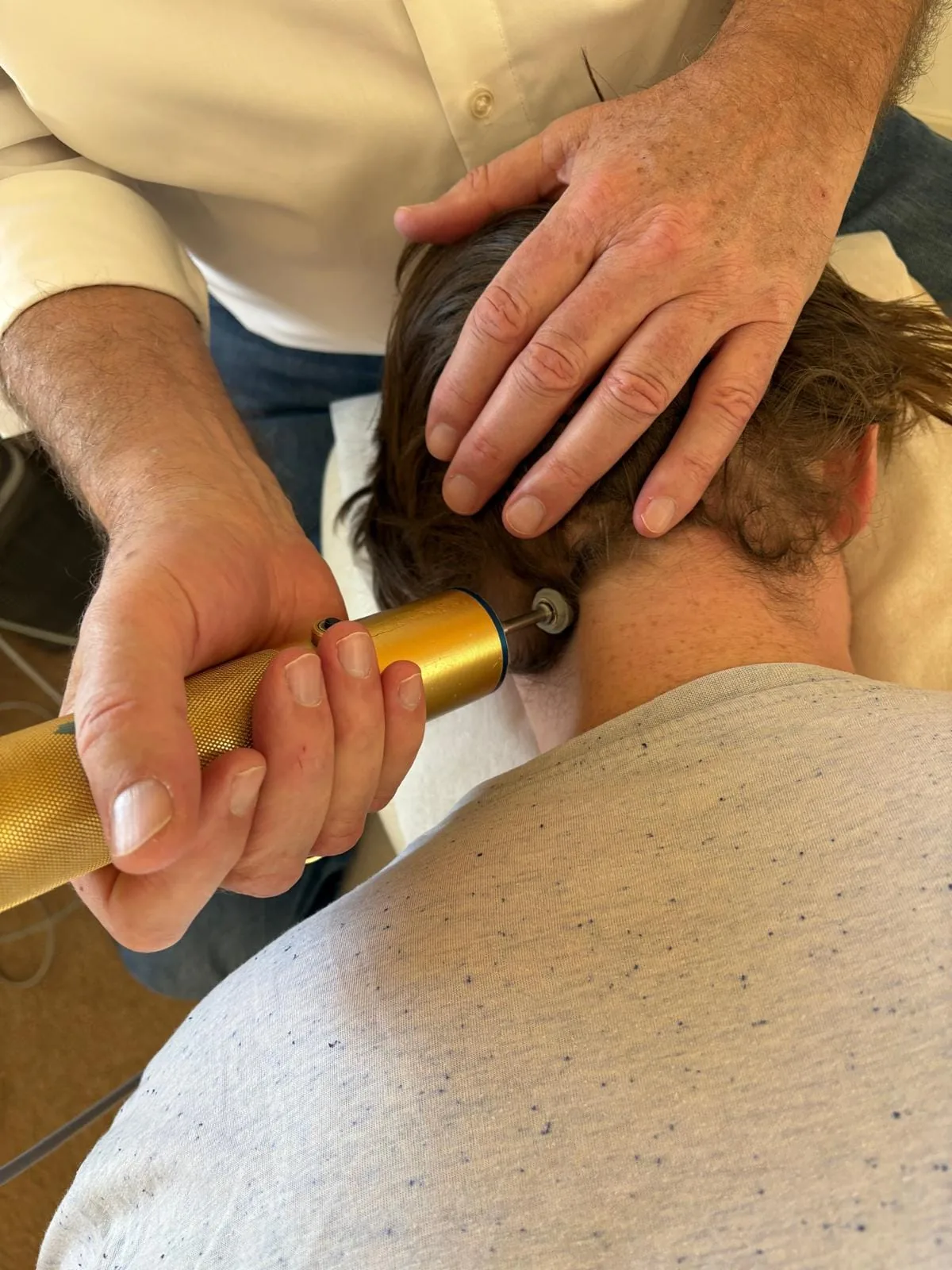
Atlas Zone Therapy releases the short suboccipital muscles directly with the Swiss-developed device, so the atlas can move back and the tension chain above and below it lets go. Clients very often feel the neck lengthen and turn further within the same session. Dr. Wim measures rotation before and after so you can see it.
Whiplash and old injuries
Neck complaints that began after a car accident, a fall or a sports collision very frequently involve the atlas. Even years later, the correction can release tension that has been held since the impact. Tell Dr. Wim about any accident at the intake, however long ago.
Common signs
- A band of tension at the base of the skull
- Head turns noticeably further to one side
- Stiffness on waking, or after screen work
- Crunching or grinding when turning the head
- Relief from massage or physio that fades within days
Doctors in the Netherlands refer patients with chronic neck and back complaints to Dr. Wim after physiotherapy and manual therapy have not given lasting results. Read their recommendations.