Where the atlas sits
Your spine has seven cervical vertebrae. The first one, C1, is named the atlas after the Titan in Greek mythology who carried the world on his shoulders. Fittingly, C1 carries your skull, which weighs around 4 to 5 kilograms. Unlike the other vertebrae it has no body and no disc. It is a ring of bone that sits on the second vertebra, the axis, and lets the head nod and turn.
Because it sits deep under the base of the skull, the atlas is hard to examine and rarely gets attention in medical training. Doctors generally assume it is in the right place. In the experience of the Atlas Zone practice, in the majority of people it is not.
Why so many people have a rotated or tilted atlas
The atlas can shift out of its optimal position in several ways:
- During birth, particularly with a difficult delivery, forceps or vacuum extraction
- A fall as a child, from a bicycle, stairs or playground equipment
- Whiplash from a car accident or contact sport
- Years of forward head posture at a desk or on a phone
- A severe blow to the head or neck
Many people carry the misalignment from birth without knowing. The body is remarkably good at compensating, so the effects can stay hidden for decades before showing up as chronic complaints.
How the body compensates, and what it costs
When the atlas is rotated or tilted, the head is no longer centred over the spine. To keep the eyes level, the body adjusts the whole chain below: the cervical spine curves, one shoulder drops, the pelvis tilts, and one leg appears shorter than the other. Muscles on one side work harder than the other. Ligaments and tissues stay under constant tension.
This compensation is expensive. It takes energy that the body could use for repair, and it produces a long list of complaints that seem unrelated:
| Region | Typical complaints linked to atlas misalignment |
|---|---|
| Head | Migraine, tension headache, a feeling of pressure in the head, brain fog |
| Neck and shoulders | Neck pain, stiffness, limited rotation, a tight band at the base of the skull, shoulder tension |
| Balance and senses | Dizziness, vertigo, tinnitus, sensitivity to light |
| Back and pelvis | Lower back pain, pelvic tilt, leg length difference, sciatica-like pain, hip and knee pain |
| Whole body | Chronic fatigue, insomnia, numbness or tingling in arms and legs, jaw problems |
How a misalignment is assessed
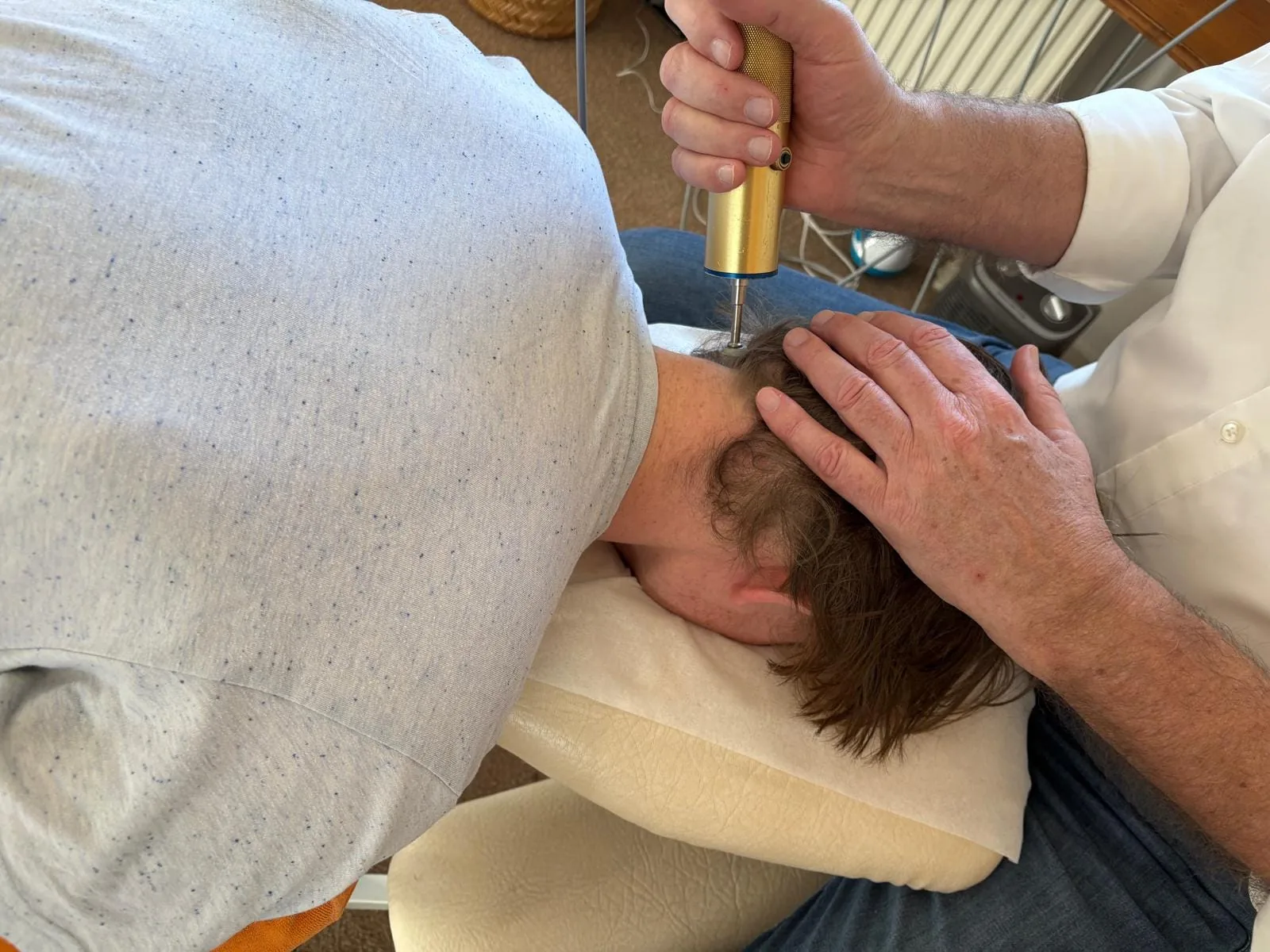
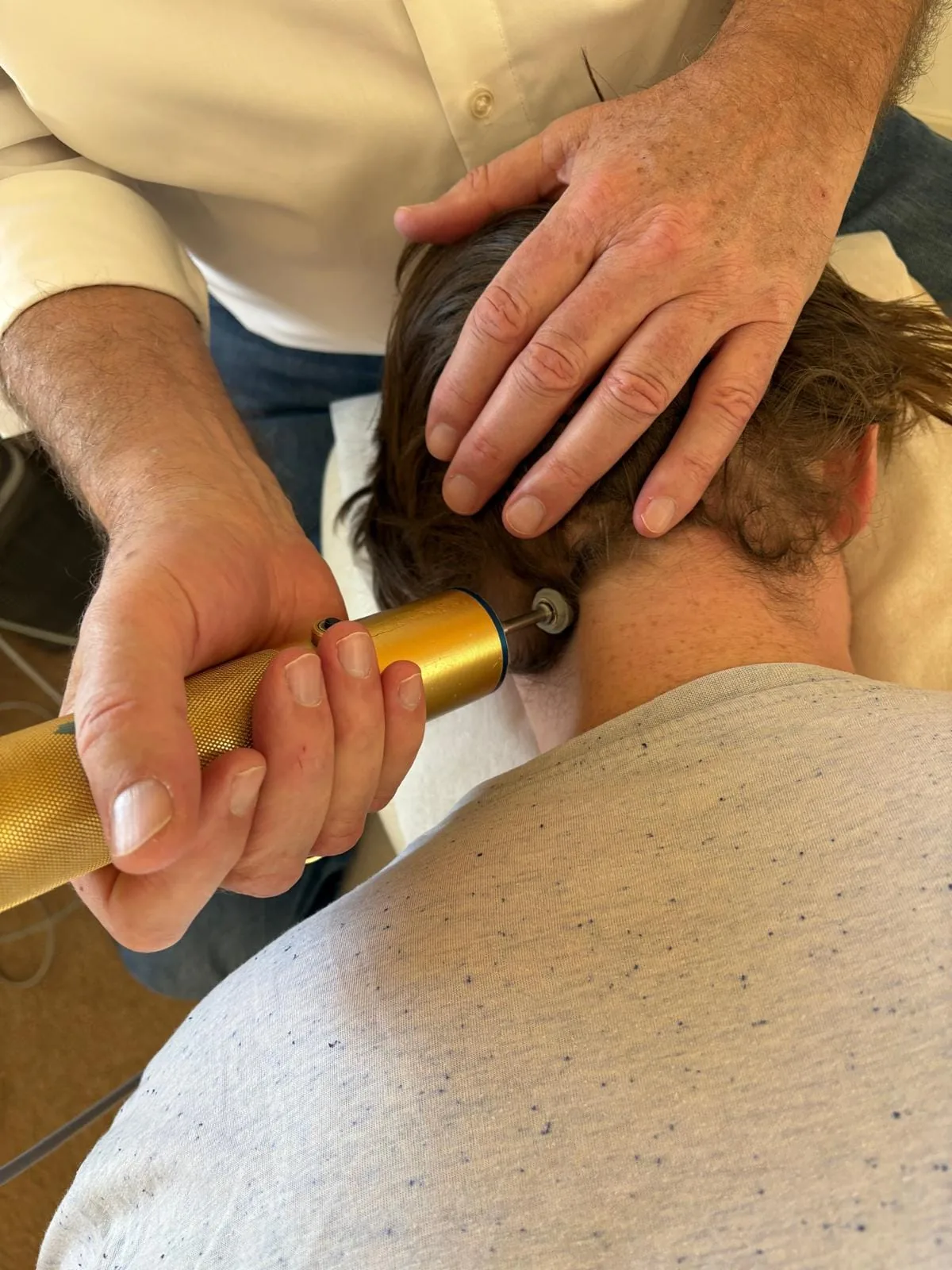
Dr. Wim uses several checks together. He palpates the transverse processes of the atlas on both sides of the neck to feel which side is more prominent. He compares leg length while you lie down, checks the pelvis, and observes how far the head turns in each direction. No x-rays are needed. These findings are compared again after the treatment so you can see the change for yourself.
What changes when the atlas is corrected
When the atlas returns to a more optimal position, the body no longer needs to compensate. Clients typically notice the neck feels longer and freer straight away, the leg length difference disappears on the table, and rotation of the head improves. Over the following weeks, deeper complaints can begin to settle as the body repairs itself. The correction is not a cure for any specific disease. It removes an obstacle so the body's own healing capacity can work, and clients often report that other treatments start to work better too.
Read next: how the atlas correction treatment works, or browse the conditions we treat.